|
|
| Asheville, NC |
|
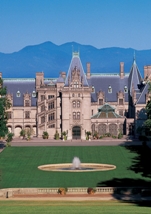
Asheville (Population 72,789) is the largest city in western North Carolina, and continues to grow. Before the arrival of Europeans, the land where Asheville now exists lay within the boundaries of Cherokee country. In 1540, Spanish explorer Hernando DeSoto came to the area, bringing the first European visitors in addition to European diseases which seriously depleted the native population. The history of Asheville as a town began in 1784 when Colonel Samuel Davidson and his family settled in the Swannanoa Valley, redeeming a soldier's land grant from the state of North Carolina. Asheville remained relatively  untouched by the Civil War, but contributed a number of companies to the Confederate States Army, and a substantially smaller number of soldiers to the Union. For a time an Enfield rifle manufacturing facility was located in the town. The Great Depression hit Asheville quite hard and most of Asheville's banks closed. The 'per capita' debt held by the city was the highest of any city in the nation. Rather than default, the city paid those debts over a period of 50 years. From the start of the Depression through the 1980s, economic growth in Asheville was slow. During this time of financial stagnation, most of the buildings in the downtown district remained unaltered. This resulted in one of the most impressive, comprehensive collections of Art Deco architecture in the United States. untouched by the Civil War, but contributed a number of companies to the Confederate States Army, and a substantially smaller number of soldiers to the Union. For a time an Enfield rifle manufacturing facility was located in the town. The Great Depression hit Asheville quite hard and most of Asheville's banks closed. The 'per capita' debt held by the city was the highest of any city in the nation. Rather than default, the city paid those debts over a period of 50 years. From the start of the Depression through the 1980s, economic growth in Asheville was slow. During this time of financial stagnation, most of the buildings in the downtown district remained unaltered. This resulted in one of the most impressive, comprehensive collections of Art Deco architecture in the United States. |
 |
| |
|
| Cherokee, NC |
|
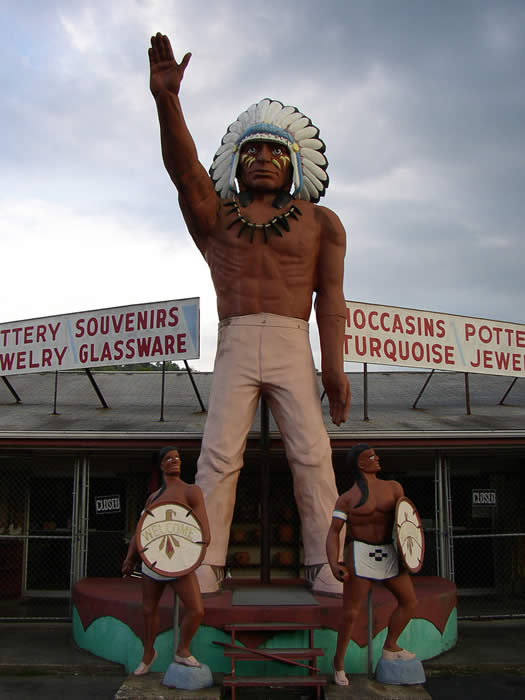
This region offers a rare opportunity to hike, fish, raft and explore the same magnificent region the Cherokee Indians have called home for thousands of years. The Cherokee Indians first arrived in the Smoky Mountain region in about 1000 A.D. They named the Smoky Mountain area "Shaconage," or "place of blue smoke" and enjoyed a progressively settled existence, relying heavily on agriculture. However, throughout the 1700s and 1800s, the encroachment of European settlers forced many changes in Cherokee life. Although the Cherokee did exist peacefully with early settlers, the Indians were eventually forced the Cherokee people from their homelands. The discovery of gold in the mountains of northern Georgia sealed the Cherokees' fate and in 1830, president Andrew Jackson signed the Removal Act, mandating the removal of all native peoples east of the Mississippi River. Of nearly 16,000 Cherokee forced out, only about 12,000 survived the journey to Oklahoma, known as the Trail of Tears. Some Cherokee refused to leave their home, hiding high in the mountains. By 1889 the 56,000-acre Qualla Indian Reservation was chartered in North Carolina to serve as their home. These Cherokee are known as the Eastern Band and continue to populate the reservation today.
|
 |
| |
|
|
|
 |
|


